
Where Former Portage County Owners Appear
Match the source to the period. The Register of Deeds reports backscanned indexes and images reaching to 1856. That reach is separate from computer indexing. It is separate, too, from document imaging, tract indexing and microfilm. The library gives address and occupant context. It is not a deed substitute. A gap in one online layer calls for a different book, index or collection.
| Source | Years It Covers | Where Held | What It Shows |
|---|---|---|---|
| Backscanned deed index and images | To 1856, with gaps possible | Register of Deeds / Tapestry | Party and instrument leads |
| Computer index | January 3, 1984 forward | Volume 447, page 221 onward | Indexed land-document references |
| Microfilm | Volume 394 begins the cited run | Register of Deeds | Older book and film access |
| Document images | November 1997 forward | Tapestry / office | Image access differs from index access |
| Tract index | August 2001 forward | Register of Deeds / Tapestry | Property-based index path |
| City directories | 1889-1921 | Portage County Public Library | Street, occupant and address clues |
Start with the recorded grantee in Tapestry for a modern transfer. Older house histories need more. Trace the deed chain, then layer in the library's city directories and Sanborn maps for context. Silence is not a missing owner. The county calls 1856 its earliest backscan. It is not a promise that every instrument from that year is image-complete.
Portage County Directories and Sanborn Maps for House History
The Portage County Public Library keeps Stevens Point and county directories dating from 1889 to 1921. It also holds Sanborn maps for Stevens Point and Amherst plus indexes to local newspapers, obituaries, and cemeteries. A directory entry can yield an occupant, a spouse notation, an occupation and employer, and a street. It may even hint at whether the resident owned or rented. Comparing adjacent years reveals an address change. A Sanborn map then orients the building footprint. A deed or plat ties the location to land.
One caution: the library's Central Wisconsin Genealogy Index gives citations, not always the record image itself. The Wisconsin Pinery index covers 1853 through 1890. The Plover Times covers 1866 to 1881. The Stevens Point Journal Weekly covers 1885 to 1888. The Journal index runs from 1992 through November 2005. Gaps between those publication runs should not be filled by assumption.
Browse the library's genealogy and history resources before requesting an archive item.
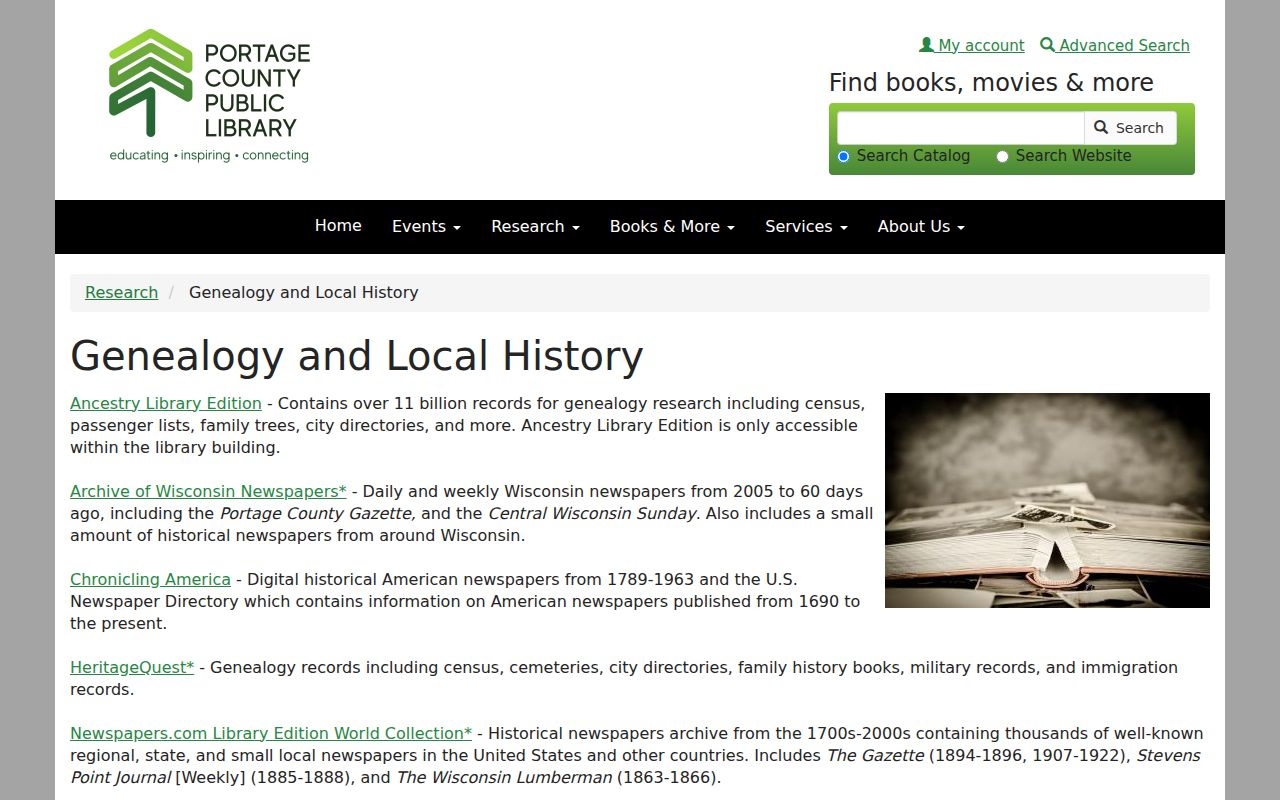
Library sources identify who lived at an address. The county land record, though, is what establishes the transfer. Portage County deed records confirm ownership, while directories only suggest occupancy.
Portage County's Back-Indexing and Coverage Layers
Portage County started back-indexing its land records in 2014. The aim was to open older deed records through Tapestry and Laredo. The project did not make every book, index entry and image identical, though. Coverage has distinct starting points. Backscanned images reach back to 1856. Computer indexing begins with Volume 447, page 221, dated January 3, 1984. Image access starts in November 1997, and tract indexing in August 2001. Fidlar went live in 2013, replacing the county's earlier TriMin system.
A former owner of record can vanish from a name search for simple reasons. Note which index and image layer you searched. Then try alternate spellings, initials, and former names. A tract or book route through the parcel reference often works better. Keep in mind that a recorded reference may exist without a viewable image online. The Tapestry portal is the entry point for both current and older index work.
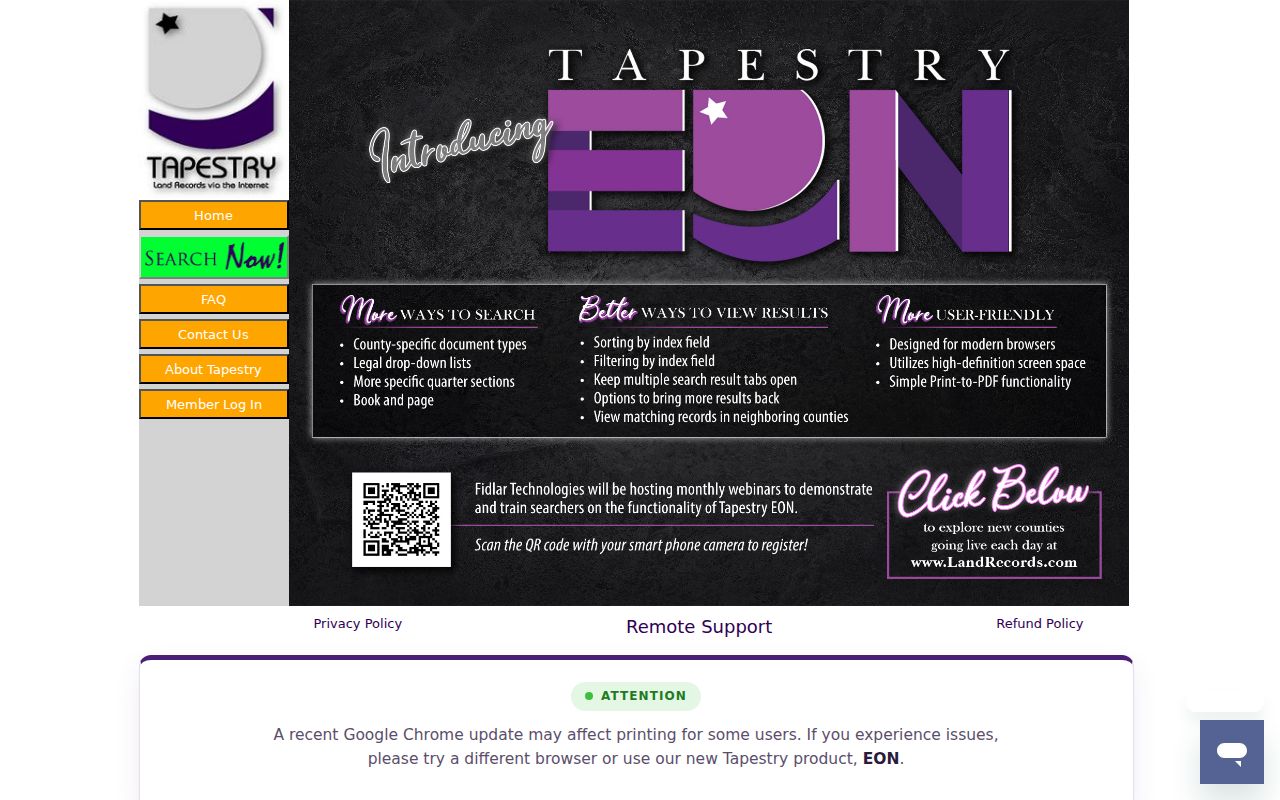
Check both the index layer and the image layer first.
Use a Legal Description When a Portage County Address Changes
Addresses drift over time. A road rename, a new municipal boundary, or a postal reassignment can all change the situs address. A mailing address may point somewhere else entirely. The legal description in a deed anchors the land far better. The recorded plat pins it down even more. For an old Stevens Point address, work through a directory entry to find the street. Orient the building on a Sanborn map. Then compare that historical position against the present parcel in GIS. Only after that map-to-record match is clear should you copy the parcel number and municipality.
Portage County has no countywide street-renumbering project. Around Stevens Point, Plover, Whiting, and the town edges, postal identity can differ. The taxing municipality may differ too. The Portage County parcel maps guide walks through the municipal-boundary and legal-description cross-check.
Walking the Portage County Deed Chain Backward
Begin with the most recent deed that matches your parcel. Read the current grantee and the legal description. Then search for that earlier grantor as a grantee. Repeat the process backward, one instrument at a time. Street numbers often fail as the chain reaches older eras, so compare the parcel, lot, block, and legal description instead of assuming each deed carries the same address. Along the way, record the volume, page, document number, and parties for every deed in the chain.
- Locate the latest deed and write down the grantee, legal description and recording reference.
- Use the deed's grantor as the next earlier grantee to find.
- Compare the description and parcel clues before accepting the next link.
- Move to the county's book, microfilm or appointment route when online layers end.
- Grantor / grantee
- The parties transferring and receiving the interest in the instrument.
- Chain of title
- The linked record sequence of past conveyances.
- Legal description
- The land reference used to match earlier deeds when addresses shift.
Portage County Deed Books Require an Appointment for Genealogy Work
Portage County deed books sit in a supervised research area at the Register of Deeds. Plan ahead if you want to trace old owners of record through the bound volumes. You must book an appointment. Bring photo ID. Then hand in a completed search application that names the records and dates you need. Two researchers can work there at once. Sessions run Monday through Thursday, 9 to 11:30 a.m. and 1 to 3:30 p.m.
Inside, the genealogy workflow has firm rules. Search the index first, then pull your volume. Pencils only. Return each book when done and sign out before leaving. Phones and cameras stay out of the room. These limits apply to the supervised records area, not to every online deed search. So if your chain of title points to a book or microfilm reel, ask staff which access route fits. The office sits at 1516 Church Street, Stevens Point, WI 54481, phone 715-346-1428. Review the Portage County genealogy access rules before your visit.
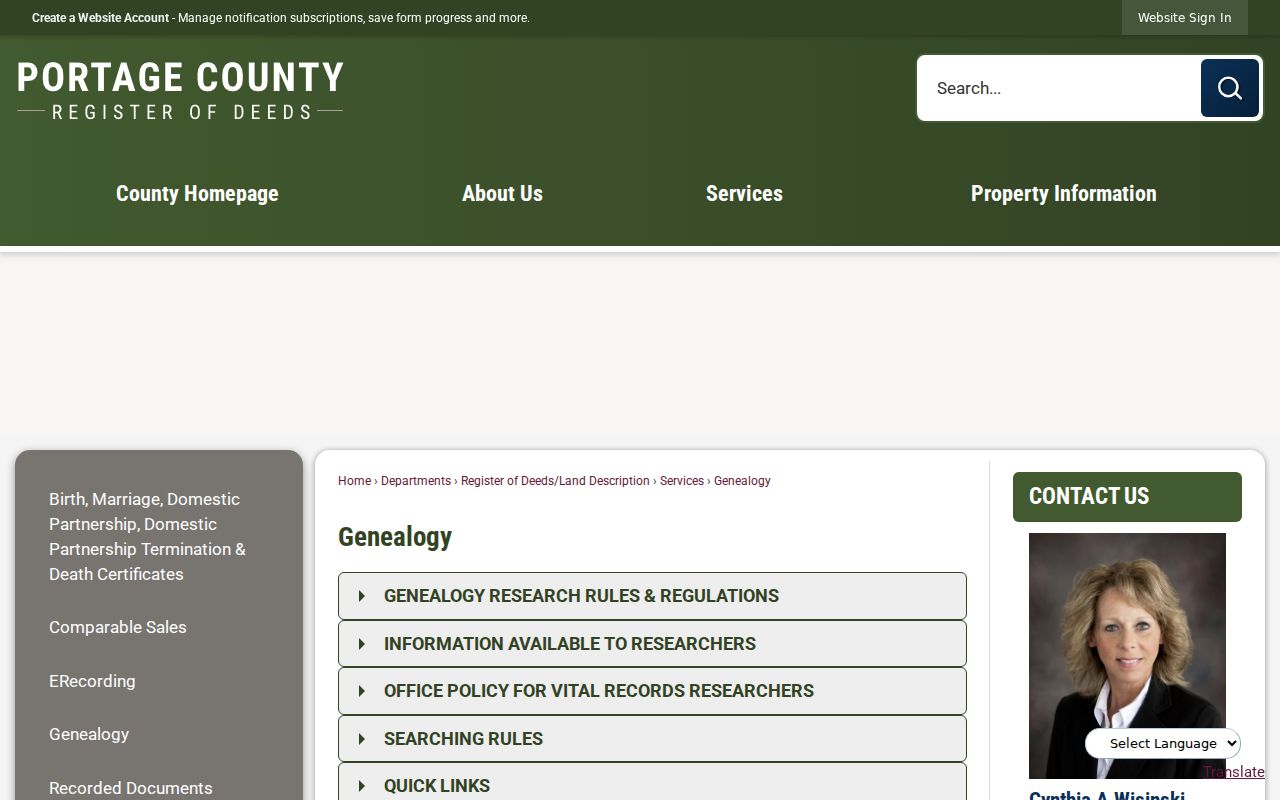
When a Portage County property records search leads back to a historical deed book, the Register's appointment process is the documented route for an in-person review.
Estate Transfers and Vital Records in Portage County
A former owner may have moved property through an estate, yet a death certificate is not a deed. The recorded instrument plus the court or probate file show how title actually changed. Wisconsin's court case search can surface a public case. Confidential or protected matters may not appear in full. The Portage County Register of Deeds and Wisconsin DHS issue vital records under separate access rules.
Portage County issues statewide birth and marriage records from October 1, 1907, death records from September 1, 2013, and divorce records from January 1, 2016, subject to eligibility. For a death record under 50 years old, specified information is restricted to direct descendants or those with a direct and tangible interest. Applicants need current ID, and the county warns that copying or reproducing a certificate is a felony under Wis. Stat. 69.24(1). Check eligibility before ordering.
Review the county's vital-record application page and the state application forms for the exact record type.
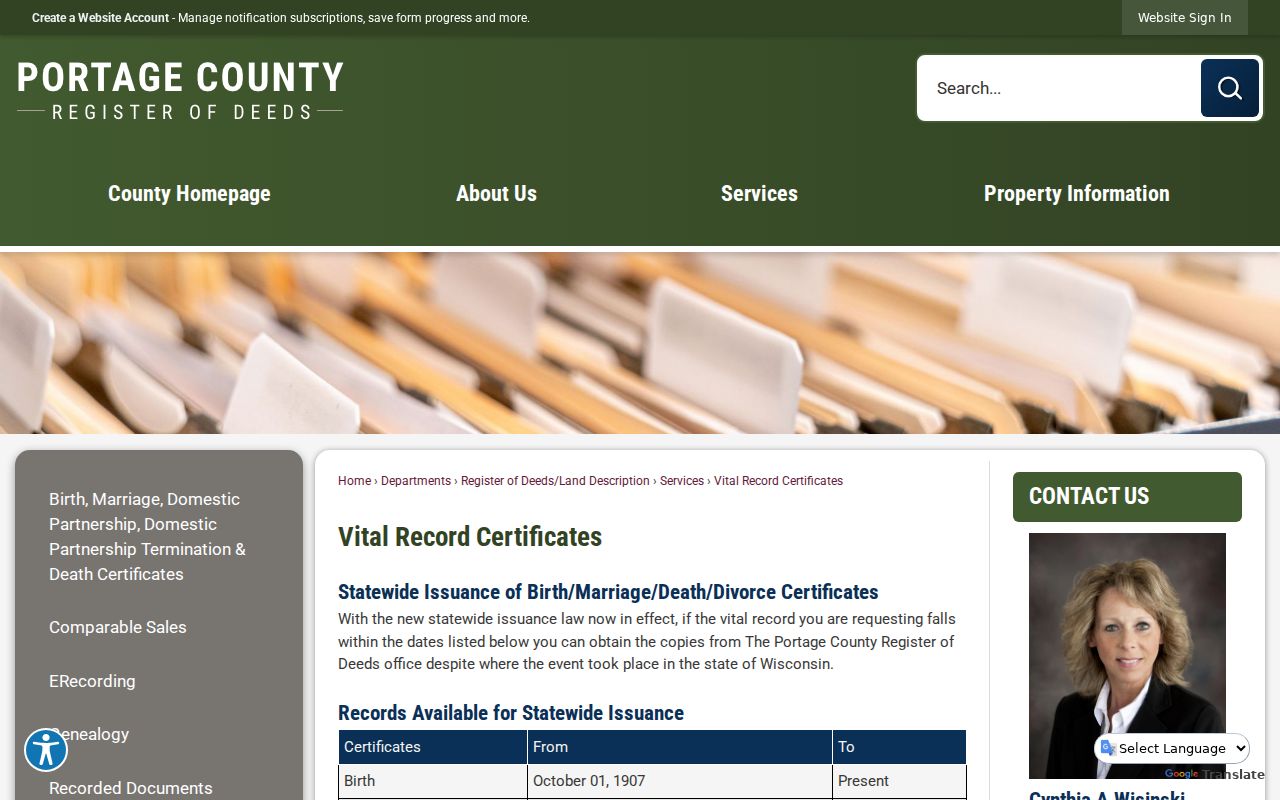
The county page details local ordering and ID rules. A death record alone does not show how ownership changed, so pair it with the land instrument that transferred the property. For statewide applications, use the Wisconsin DHS application page.
The DHS application hub supplies statewide forms and does not remove the eligibility limits.
Search Former Portage County Owners Under More Than One Name
Names drift. Older deeds rarely match a current tax record name for name. Initials, spelling, marriage, trust capacity, or an entity rename can explain the gap. Search each variant. Try every form as both grantor and grantee. Verify each hit. Match it against the legal description and parcel history.
Wisconsin DFI helps with an LLC or corporation, showing prior names and charter history. It names no members or beneficial owners, so never confuse a registered agent with the person who actually owned the land. A trust or estate may linger in the chain under its formal legal name. When old and new records disagree, compare the deed date, the parties, the volume and page, and the land description before extending the chain further.
Why No Portage County Index Hit May Not End the Search
An empty search result rarely means the end. Spelling explains many misses. So do index cutoffs, images sitting on a different layer, an older book, or a tract description that changed over time. The county's coverage milestones matter here. The computer index begins in 1984. Images follow in 1997. Tract indexing starts in 2001, and backscans reach all the way back to 1856.
When a chain stops at one of those boundary years, ask the Register of Deeds for a book or microfilm reference. The library's historic indexes can yield an obituary or directory citation that names a former owner or address. Check any cited record at its source, and keep each uncertainty visible rather than treating one empty page as proof no prior owner existed.
How Far Back Portage County Ownership Records Reach
Backscanned index and image material reaches 1856, according to the county. That year is a milestone, not a promise of completeness. Material from that era may be incomplete or lack images. Volume 394 marks the start of the cited microfilm. The computer index begins at Volume 447, page 221. Image and tract systems arrive later still. Push past those cutoffs, and the Register of Deeds or library staff can help. They can point to the right book, film, or archive.
House history rewards patience. Recorded deeds pair well with directories, Sanborn maps, newspaper citations, and cemetery or obituary indexes. For a title question, tread carefully. The county recording chain is only one piece of professional title research. A former owner's name serves civic and family history well. It should never be used to find or contact a living person for harassment.
Lawful use. Use Portage County prior-owner records for house history, title reference and property diligence. Do not use them to track, stalk, harass, intimidate or harm anyone.